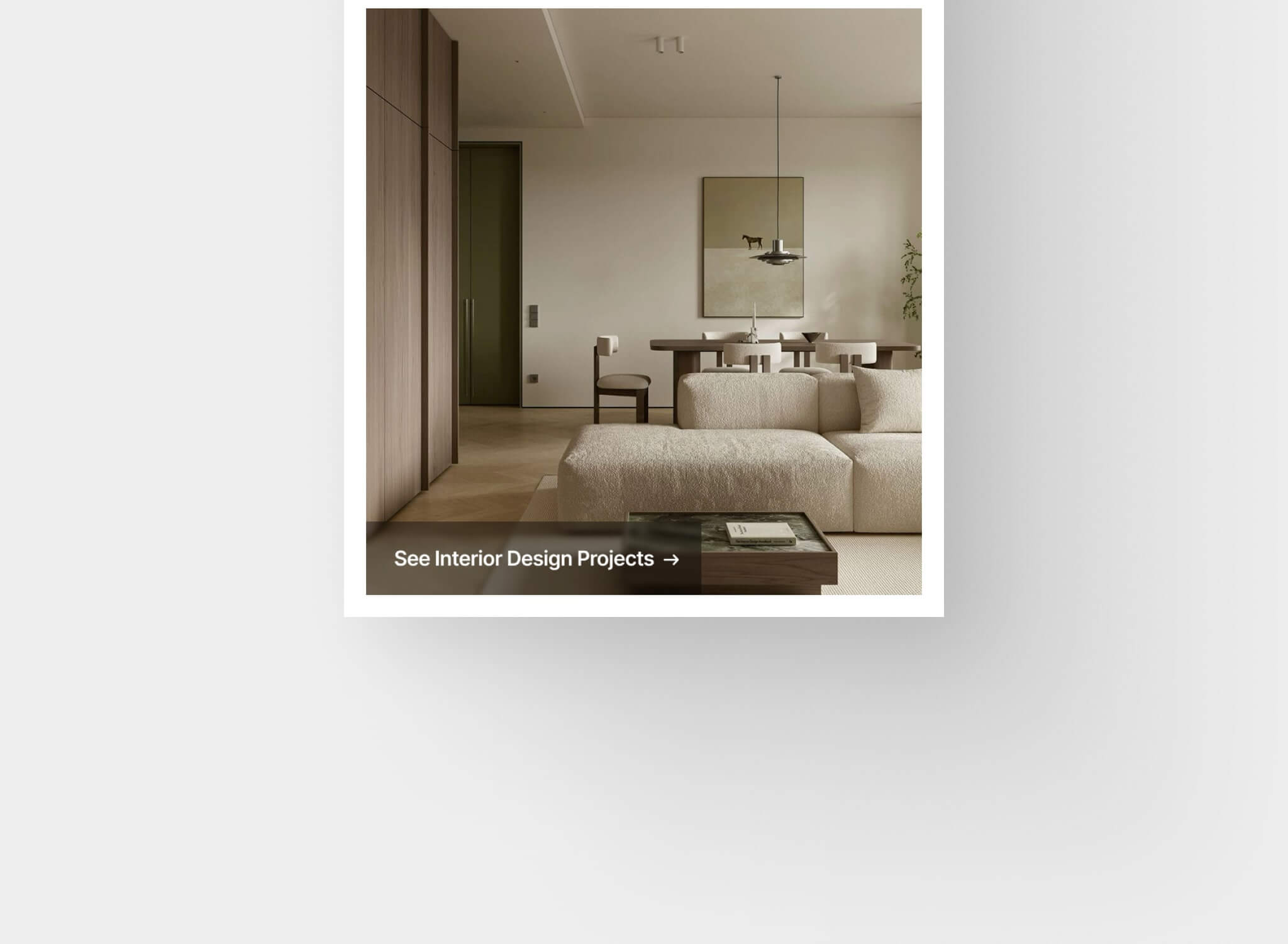
Paul Interior
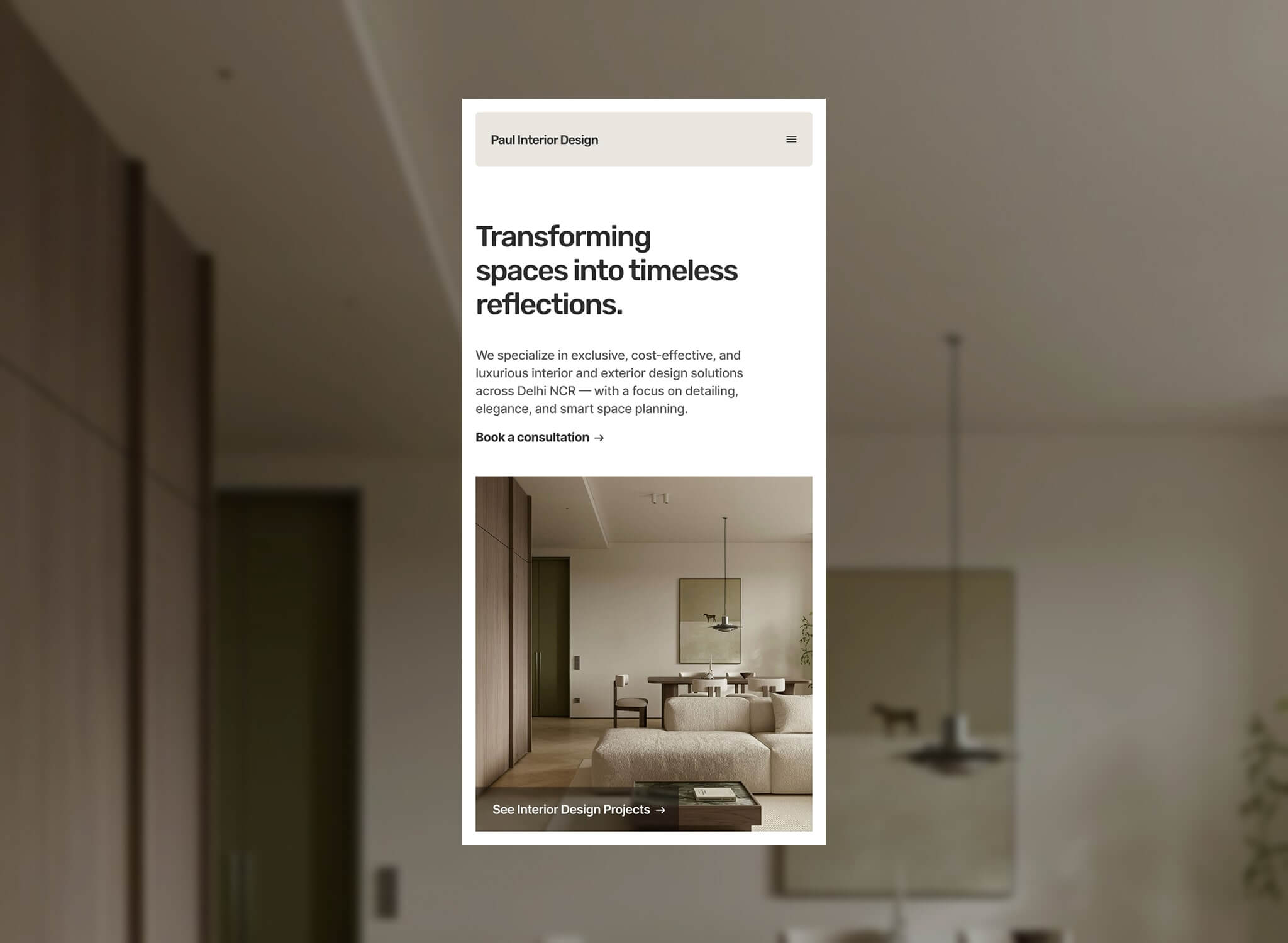
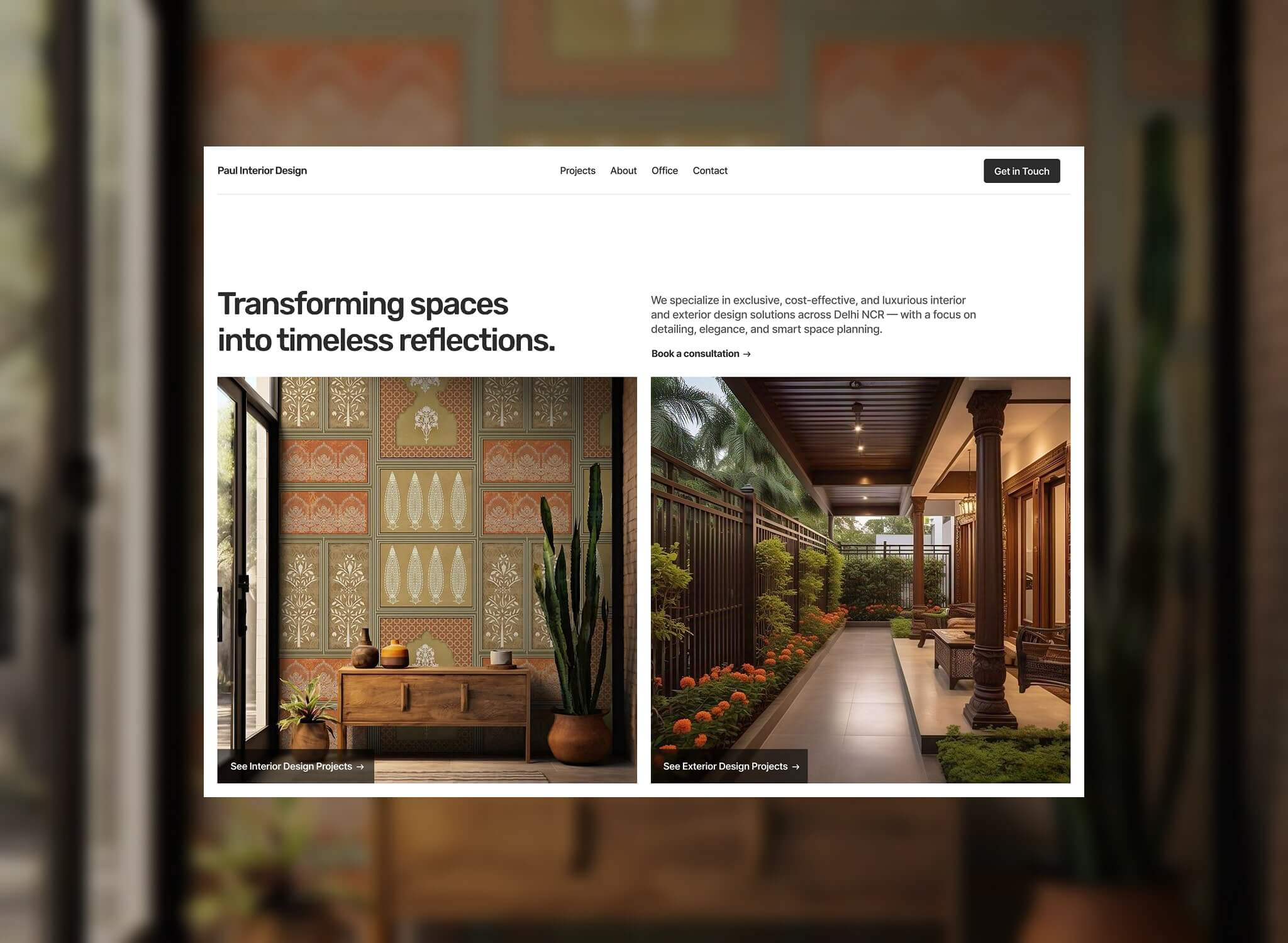
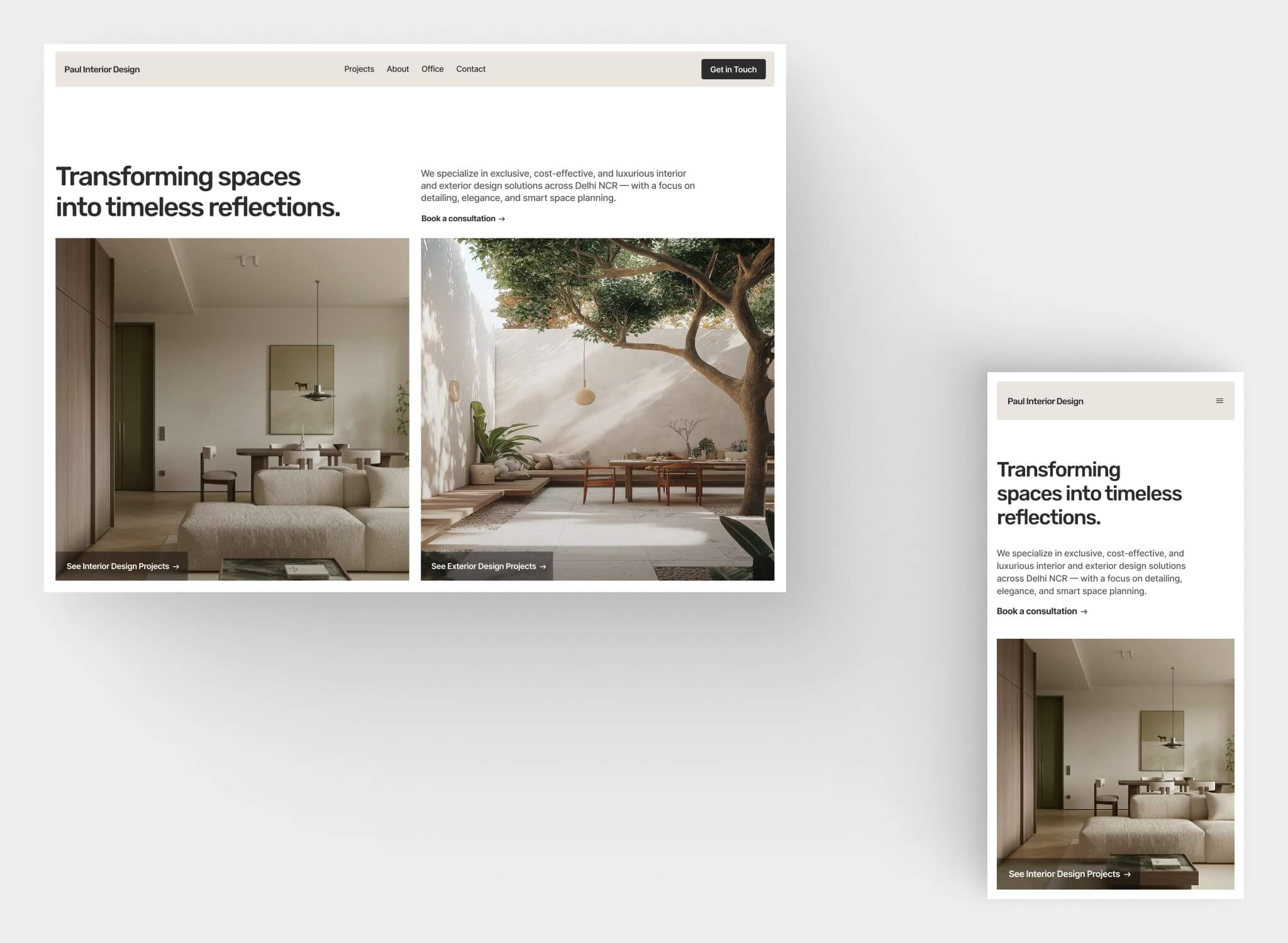
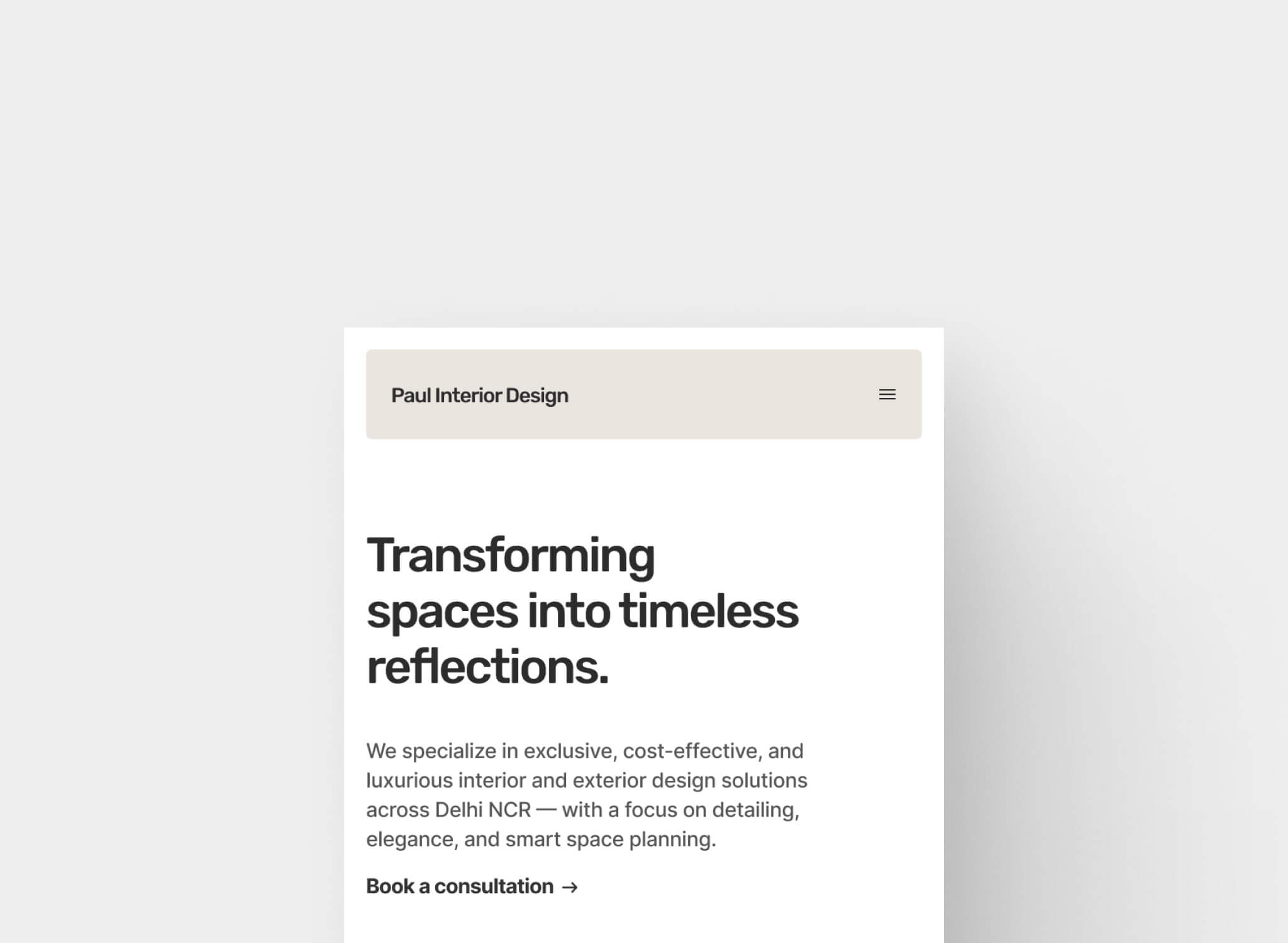
Paul Interior is a boutique interior design studio website designed to showcase refined spaces and curated aesthetics. The site balances imagery and text with clean layouts, highlighting the studio’s expertise in modern yet timeless interior solutions.
IMPACT
Adoption
Rolled out to major module with strong usage among power users. To pave the way to a more digital workflow, the company assigned extra tablet devices to power users on site with this release.
Scalabilty
This release streamlined users to complete task at volume, efficiency, consistency and accuracy. It removes the ceiling of manual cross checking and collation, cutting end-to-end process time.

PROJECT OVERVIEW
Background
It was highlighted that less than 1% of Acciona annual revenue is spent on tech innovation. The industry traditionally relied on paperback to report, monitor, procure and track their projects and is now entering a transition period of rapid adoption of digital workflows.
Challenges & Problems
As we are tapping into an established paper workflow that users have been accustomed to for many years. It's important to understand why it has worked so well for existing users and evaluate for onboarding and adoption risks when launch.
Project Goals
Launch of the end-to-end workflow with focus to provide efficient digital workflow for target power users to complete crucial daily tasks with focus for seamless adoption and onboarding as replacement for their current physical paper workflow.

APPROACH
(1) Kick off Workshop
Bringing key stakeholders together to align and outline the project objective and highlight any potential challenges at hand.
(4) High-Fidelity Prototyping
Refinement of prototypes based on feedback, alignment and approval of business and design teams for launch.
(2) User Research
Understanding existing workflow and pain points to finding insightful data that can be translated to their new essential daily workflow.
(5) User Testing
Conducted rounds of internal testing with power users to further refine the designs and noting opportunities moving forward.
(3) Wireframing
Rapid wireframing to visualise ideas and map out the structure of workflow and screens to gain quick insights and A/B testing early.

RESEARCH
Contextual Research
From evaluating the existing hardcopy paper processes from sites. I discovered that users often wrote extra notes outside of the marked fields. This showed that users often worked around the "official" workflow.
Affinity Mapping
Through organising the themes in the mapping, the insight of device & environment constraint was list as the main concern. Onboarding risk was also heavily considered to specific user groups that work on site.
Competitive Analysis
The team shared findings of existing tech tools to benchmark patterns and workflows that are already familiar to the industry. This allowed us to understand potentially what these users may already expect as it is common for this industry to outsource software for specific projects.

THOUGHTS & PROCESS
Considerations
By talking to the users who live the problem every day. It was a common pattern that they were skeptical about the new process changes and lose their autonomy.
This led to us creating a flexible workflow by only placing required field only if absolutely needed and validated by BA. This reduced bad data quality and reduced the risk of blocked progression and frustrations to users. Other details that were previously done outside the official forms like notes and photos were also added as optional input to bridge the gaps.
RESULTS
Finial Outcome
The finial design featured minimal UI that displayed data from tables and creation forms workflows in digestible segments that guides them rather than just grids that previous existed on physical paper.
Responsiveness to tablet was key in this design too, to ensure it worked as intended when users are remote on site.
Onboarding process were implemented in SMEs workshops to showcase and provide walkthrough of the new process had great reactions and this was soon validated through usability testing, specifically on the first run experience with fewer support ticket than expected.
Highlighted Results:
Adoption: Enhanced daily workflows, with major adoption across teams and key stakeholders.
Scalability: Time to first lodgement reduced from days to minutes and allowed while allowing for volume to be handled on one platform.
Reduced Error: Drop by 30% in request for clarification and resubmission with clear history and data procedures to handle it more efficiently.