Solvera
Login is the first real interaction that users have with Solvera, and it's current state it is causing noise most noticeably in useability drop off, security and expectations of SSO that were identified through session recording and other metrics. As the product designer in this task, I helped define the revamp of login and onboarding workflow.
PROJECT OVERVIEW
Project Ownership
My Role: UX/UI Design Lead
Team: 1 Designer (Me), 1 Developer, 1 Project Manger.
Requirements & Goals
Redesign of the login process to enhance and tackle the four key issues of: user drop off due to friction, usability gaps, security risks and the absence of modern login options like SSOs that users now expect from apps.

CHALLENGES
Security & User Trust
We noticed an increase in disposable emails signing up, inflating userbase with accounts that never converted or engaged with the product and also skewed data of users and other metrics.
The lack of SSO and OTP made users perceive the product as dated. With approval to implement these features into the process, I was in charge of site mapping to see where it fits seamlessly into the flow.
Design System Debt
The existing login process was quite linear and allowed users to simply sign in through email and password. Plans of adding the SSO into the workflow exposed a problem that wasn't visible until now. Existing components like the input fields and other states could not represent these screens clearly, they were either missing from the system or inconsistent with each other which made the flow look pasted in instead of native to the product.

THOUGHT PROCESS
Evolving the Design System
A login screen that combined old and new components would make the screen visually inconsistent and erode the trust of users on their first impressions. So with that thought in mind, the team updated and revamped 10+ new components to the design system that can be reused across different flows like sign up forms and account recovery.
Rapid Review
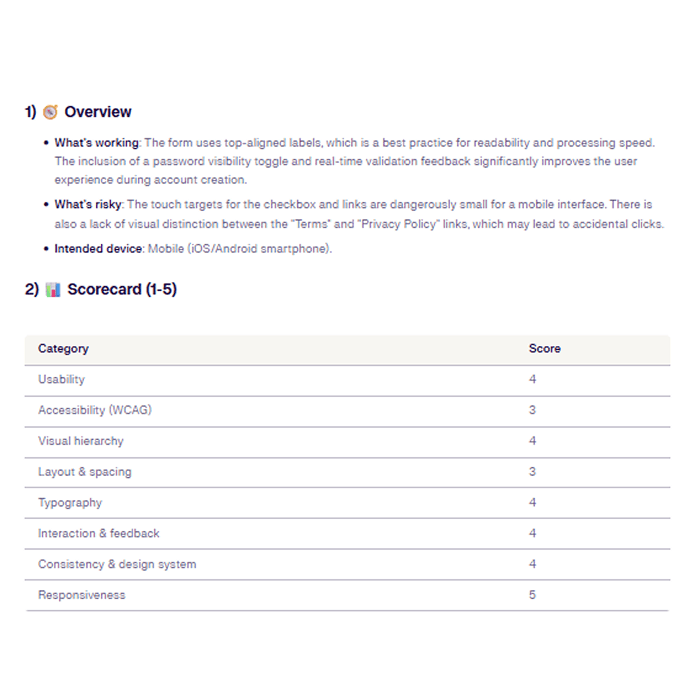
Due to the time constraint of the project timeline, I utilised UX Pilot AI to do rapid design critique. Many findings like usability risks and other potential gaps were reported back to the team and strengthened our final decisions.

CONSIDERATIONS
Native autofill first, manual entry as feedback
To eliminate the need for users to switch between apps to manually enter the code, the input field was designed to support the native autofill feature across both IOS and Android. This removed a full step for most users from this verification process and reduced overall errors caused by mistyped codes.
Resend cooldown increased
Initially the requirements called for a 30 second cooldown. User testing revealed that it felt punishing when users had limited time to complete entry manually, especially when SMS delivery was delayed. Cooldown timer was increased to 1 minute with a visible countdown which made it transparent and reduced perceived wait time without compromising security.

IMPACT & VALIDATION
UAT Testing
Given the time constraint with this project, I underwent internal walkthrough and testing to simulate real users. These sessions measured and stressed tested the expected performance, user interactions and any potential bugs or gaps.
Through internal A/B testing, it was found that:
Participants completed SSO sign in under 6 seconds, versus 13+ second for manual entry of email and password.
Participants who were not flagged by extra verification (changing of devices) completed login within a single step. Some said "that was easier than before"
Participants took quick notice of the SSO options without being prompted, which signals strong discoverability.
Looking Back
The initial plan was to treat the SSO/ OTP as a simple addition, however the direction of the project shifted more than once. Although it was seen as a speed bump in the project timeline, it allowed the team to make the decision to evolve the design system and dive deeper into the workflow which ultimately created a more valuable impact to the product. Next time I'd bring in real user data testing rather than just relying on internal testing which would replace assumed impact with measured results and give the team better evidence to make decisions going forward.